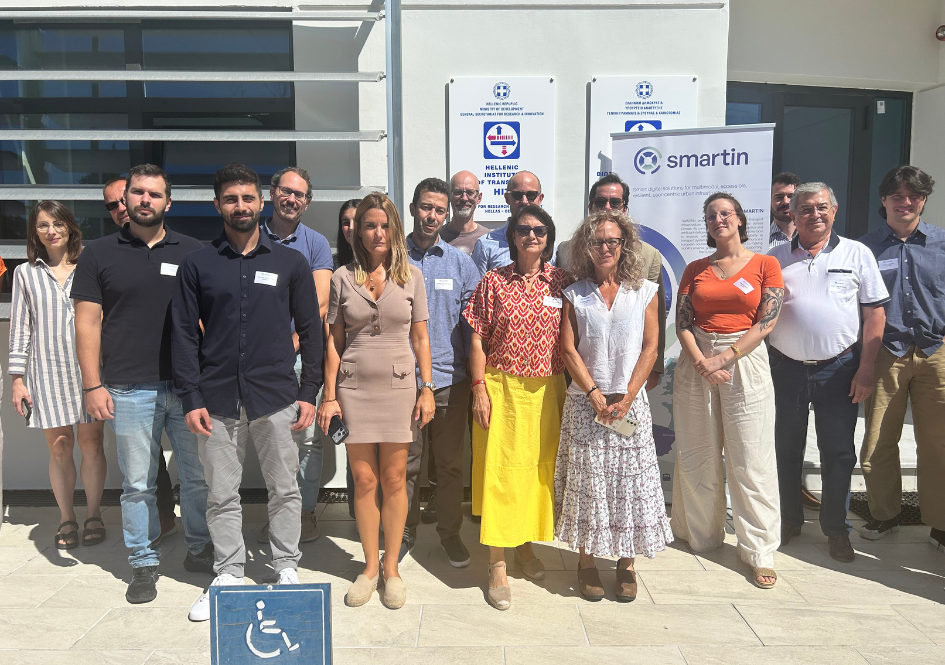
The first day opened with updates on cross-cutting technical activities, including infrastructure performance assessment, the SMARTIN Data Space and integrated platform, and behavioural analysis supporting digitalisation uptake.
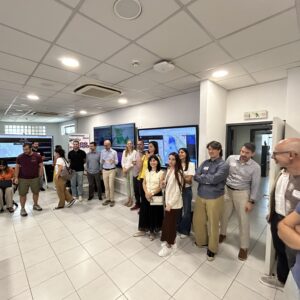
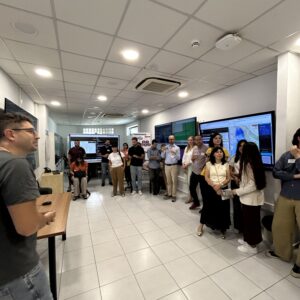
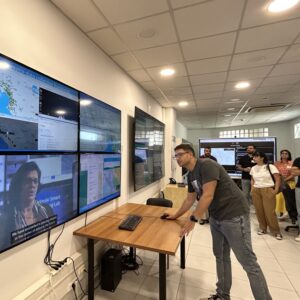
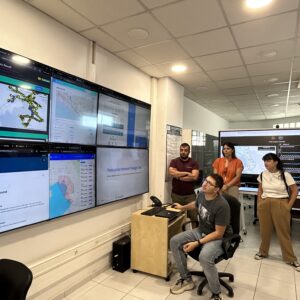
Partners also visited CERTH’s Decision Theatre, exploring tools and technologies used in its research activities, some of which are being adapted within SMARTIN. One example is the Pedestrian Routing Tool, originally developed for Thessaloniki and now being adapted for the Barcelona pilot.
The focus then shifted to Budapest and Barcelona. Partners reviewed progress on the pilots’ use cases, technical integration, data availability and next steps. In Budapest, activities are advancing to improve the safety and efficiency of passenger vessel traffic on the Danube, while Barcelona is developing solutions to assess cycling infrastructure safety and better protect vulnerable road users.
The day concluded with updates on communication and dissemination, governance and capacity building, exploitation, harmonisation with other European initiatives, and standardisation.
On the second day, attention turned to the Turin and Latvia pilots, with discussions focusing on implementation planning, infrastructure deployment and outstanding data dependencies. Turin is progressing with dynamic lane management for multimodal traffic, while Latvia is developing data-driven solutions to improve the coordination of regional bus and rail services, optimise connections and support more informed planning.
Across the four pilots, discussions helped clarify remaining challenges and next steps as SMARTIN advances towards the integration, deployment and validation of its solutions in real-world environments.