SMARTIN brings together experts from across Europe to develop digital solutions that can transform the way transport infrastructure is monitored, managed and optimised. Through SMARTIN Voices, we highlight the people contributing their knowledge and expertise to make this vision a reality.
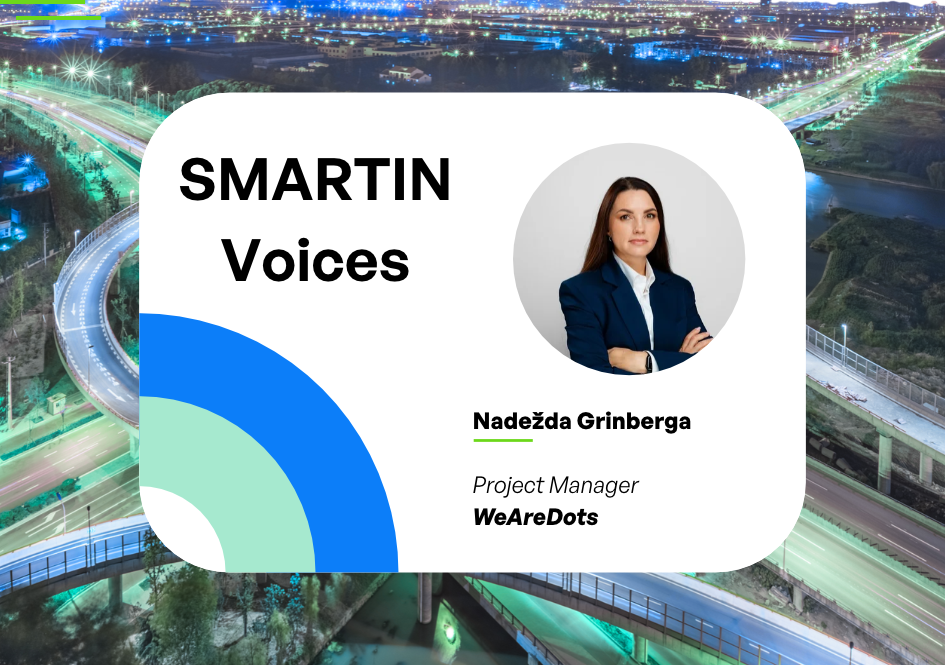
For this fourth interview, we speak with Nadežda Grinberga from WeAreDots about her role in leading SMARTIN’s multimodal mobility activities and the Latvian pilot, the importance of involving end users in developing practical digital solutions, and the challenges of turning data into better transport planning and decision-making.
—
-
Could you briefly introduce yourself?
I am a Project Manager at WeAreDots with more than 15 years of experience in IT projects. I started my career as a software developer, later moved into business analysis, and eventually into project management, leading my first project in 2005. Throughout my career, I have worked on the development and maintenance of digital solutions in areas such as public services, e-health and payment platforms. Today, I focus on helping organisations transform business needs into practical and sustainable digital solutions while fostering collaboration between business stakeholders, end users and technical teams.
-
What motivated you to pursue a career in your field?
What initially attracted me to IT was the opportunity to continuously learn and explore different domains. Developing software requires close cooperation with domain experts, which allows you to understand how different organisations operate and what challenges they face. This interest naturally led me from software development to business analysis. Later, my strengths in planning, communication and problem-solving drew me towards project management.
The same curiosity influenced my decision to join WeAreDots. While I had worked in several domains before, transport and mobility were new areas for me. WeAreDots already had strong expertise and established solutions in this field, and I saw it as an opportunity to learn about a domain that plays a vital role in people’s daily lives while contributing to the development of innovative mobility solutions. What motivates me most is seeing a solution evolve from an idea into a real product that people use every day. The greatest satisfaction comes from knowing that something developed under your leadership genuinely helps others perform their work more efficiently and effectively.
- What is your role and your organisation’s role within SMARTIN?
I am the leader of Work Package 5 and the Pilot Lead for the Latvian pilot. My responsibilities include coordinating activities related to multimodal mobility solutions, pilot implementation, and collaboration between project partners and end users. WeAreDots is a technology partner responsible for developing digital solutions within the project. We work closely with stakeholders to transform business needs into practical tools that support transport network analysis and decision-making processes.
- What impact do you expect your work to have on the project’s objectives?
I hope that the solutions developed within SMARTIN will continue to be used after the project and provide tangible benefits for transport experts. Planning and optimising public transport networks, especially when considering multimodal connections, is a complex task that requires analysing large volumes of information. Our goal is to provide tool that help experts make better-informed, data-driven decisions. For me, success means creating solutions that simplify everyday work, support more efficient transport planning and ultimately contribute to better mobility services for citizens.
- From your perspective, what makes SMARTIN innovative or particularly relevant for the future of transport infrastructure?
SMARTIN combines several elements that are essential for the future of mobility: digitalisation, data-driven decision-making and real-life validation. The project addresses different transport modes and tests developed solutions in multiple pilots across Europe, ensuring that innovations are grounded in actual operational needs. What I find particularly valuable is the focus on supporting decision-makers with better data and insights. As transport systems become increasingly complex, digital tools will play a crucial role in planning efficient, sustainable and user-oriented mobility services.
- WP5 focuses on multimodality, dynamic transport space management and the uptake of digital solutions. What do you see as the main challenges in developing solutions that encourage people to adopt smarter and more sustainable mobility options?
The challenge is not only technological but also organisational and behavioural. People are more likely to change their travel habits when sustainable options are convenient, reliable and easy to use. At the same time, such solutions depend on high-quality data and effective presentation of information. In the Latvian pilot, one of the key challenges is ensuring the quality of available data and visualising it in a meaningful way. Digital tools can support better mobility choices, but only if users trust the information provided and can easily act upon it.
- Your experience involves working closely with end users to translate their needs into technical requirements. How important is this approach when developing digital mobility solutions, particularly within SMARTIN?
I consider end-user involvement essential. Transport experts possess valuable knowledge that comes from their daily work and cannot always be captured through technical specifications alone. Their insights help us understand real challenges, priorities and constraints. In the Latvian pilot, we work closely with experts responsible for planning regional public transport networks, and their feedback plays a key role in shaping the solution. By involving users throughout the development process, we increase the likelihood that the final product will be practical, useful and widely adopted.
—
Stay tuned for the next edition of SMARTIN Voices, where we continue to showcase the people and expertise driving innovation across the project.