SMARTIN brings together experts from across Europe to develop digital solutions that can transform the way transport infrastructure is monitored, managed and optimised. Through SMARTIN Voices, we highlight the people contributing their knowledge and expertise to make this vision a reality.
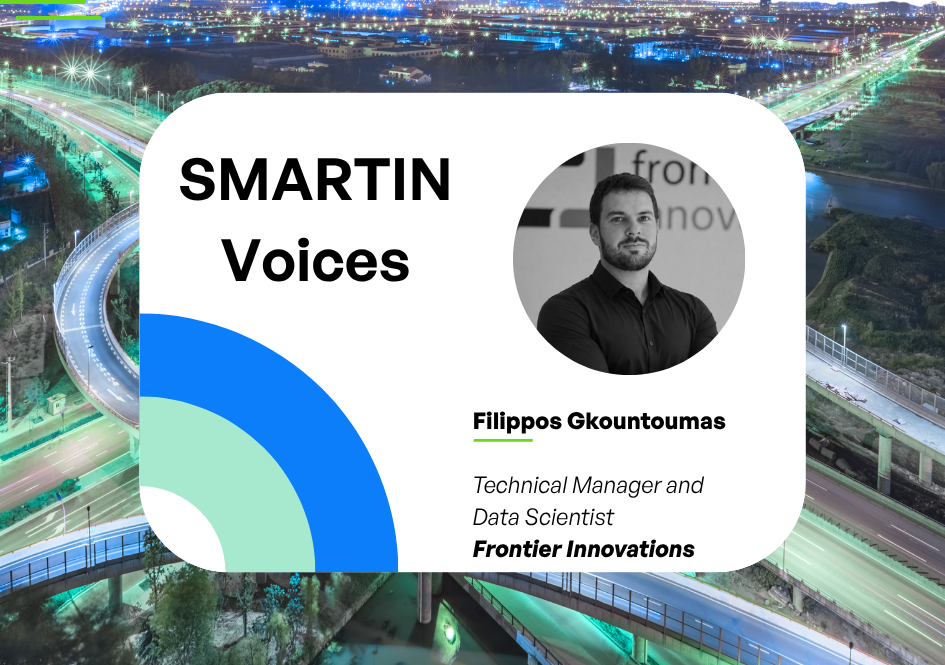
For this second interview, we speak with Filippos Gkountoumas from Frontier Innovations about his work on AI-powered infrastructure management, the challenges of translating data into actionable insights, and the future of intelligent transport systems.
—
Could you briefly introduce yourself?
I am a Technical Manager and Data Scientist at Frontier Innovations in Greece. My background combines data science, electrical and computer engineering and project management, with a focus on AI-driven solutions for mobility, safety and transport. My work revolves around leading technical teams and translating user and client requirements into practical digital solutions, especially those that leverage data.
What motivated you to pursue a career in your field?
I actually started my career as an Electrical and Computer Engineer with a strong interest in renewable energy and sustainable technologies. Over time, I became fascinated by the potential of data and artificial intelligence to solve complex real-world problems. This led me to transition into data science, where I can combine engineering thinking with innovative digital solutions that improve mobility, safety and sustainability.
- What is your role and your organisation’s role within SMARTIN?
Within SMARTIN, I lead Work Package 4 (Integrated infrastructure and mobility management solutions) for Frontier Innovations and coordinate the development of AI-based solutions for incident detection and mitigation. Our role is to transform large volumes of mobility data into actionable intelligence that supports operators in identifying risks, responding efficiently, and improving infrastructure management.
- What impact do you expect your work to have on the project’s objectives?
Our goal is always the same: to provide as much value as possible to end users. I expect our work to strengthen the project’s ability to support proactive rather than reactive infrastructure management by providing timely insights and intelligent recommendations. In doing so, our solutions can help reduce disruptions, improve operational efficiency, and contribute to safer and more resilient transport systems across different pilot environments.
- From your perspective, what makes SMARTIN innovative or particularly relevant for the future of transport infrastructure?
SMARTIN combines advanced AI, digital twins and real-time data integration into a unified approach for infrastructure management. Instead of treating incidents as isolated events, it supports continuous monitoring, prediction and decision-making. This shift allows us to move towards intelligent, data-driven operations, which are essential for managing increasingly complex and multimodal transport networks.
- As a Technical Manager, how do you balance cutting-edge technological innovation with the practical needs of end users and stakeholders?
Technology evolves constantly. Tools, frameworks and trends come and go. What remains unchanged is the way you approach a problem: understanding its root cause, identifying the real needs of stakeholders, and designing a solution that delivers value. That is why I focus on understanding stakeholder requirements first and then selecting the most appropriate technical approach. The goal is not to solely use the newest technology, but to develop solutions that are reliable, explainable, scalable and easy for end users to integrate into their daily operations.
- Which technological trends do you believe will have the greatest impact on the future of transport infrastructure management?
The combination of AI, digital twins, connected infrastructure and real-time data spaces will fundamentally change transport management. These technologies have already demonstrated their potential in different settings to enable predictive operations, automated decision support, and stronger collaboration between stakeholders, allowing infrastructure systems to become more adaptive, resilient and efficient in responding to changing conditions.
—
Stay tuned for the next edition of SMARTIN Voices, where we continue to showcase the people and expertise driving innovation across the project.